Costa Mujeres
Executive Summary
Costa Mujeres is the newest piece of Mexico’s Caribbean puzzle: a master-planned, all-inclusive corridor just north of Cancún, aimed squarely at the upper end of the tourism market. In less than a decade it has gone from mangroves and sand to a cluster of large resorts competing with the traditional Hotel Zone. By 2025 the area has close to ten thousand hotel rooms in operation and a clear pipeline of luxury projects that will push this number higher over the next few years.
For an investor, Costa Mujeres is not “Cancún 2.0” in the sense of city life and mixed-use neighborhoods. It is an upscale resort machine attached to Cancún’s airport and labor pool. The core thesis is simple: you buy into a limited set of residential and branded-residence products that sit next to billions of dollars in hotel infrastructure and try to capture a slice of that tourist flow.
The upside is clear: strong long-term demand for the Cancún–Riviera Maya region, high hotel occupancy in peak months, and continued international brand investment in new luxury flags such as St. Regis, JW Marriott, W and wellness-oriented concepts. The downside is also obvious: high entry prices, heavy dependence on all-inclusive tourism, limited local services outside the resorts, hurricane and environmental risk, and the possibility that the “exclusive new corridor” eventually becomes a dense hotel strip if regulators loosen the reins.
Realistic numbers today: for a well-located, properly managed beachfront condo or branded residence, you should think in terms of roughly 6–10% gross rental yield, which after fees, maintenance, management and taxes often compresses to about 3–6% net in USD in a normal year. These ranges are broadly in line with the wider Cancún and Riviera Maya markets.
Where and What Costa Mujeres Really Is
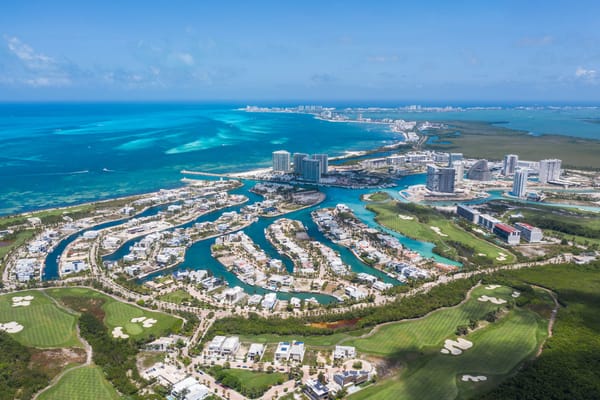
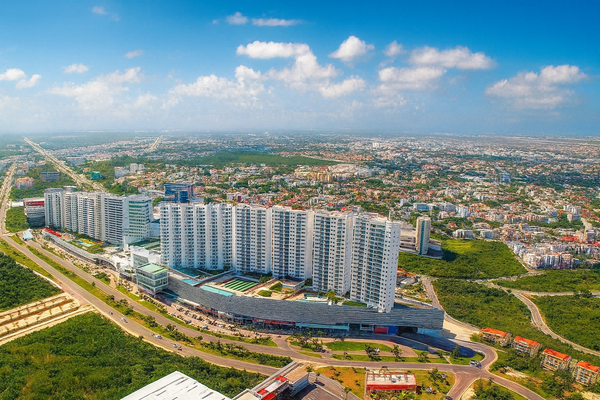
On the map, Costa Mujeres starts just beyond Puerto Juárez and Punta Sam and runs north along a low, white-sand coast opposite Isla Mujeres. It sits 25–40 minutes from Cancún International Airport depending on traffic, and about 10–15 minutes by car from downtown. In practice, though, the area is psychologically separate: once you turn off the highway into the corridor, you leave the city behind and enter a world of large, self-contained resorts framed by mangroves and lagoon on one side and open sea on the other.
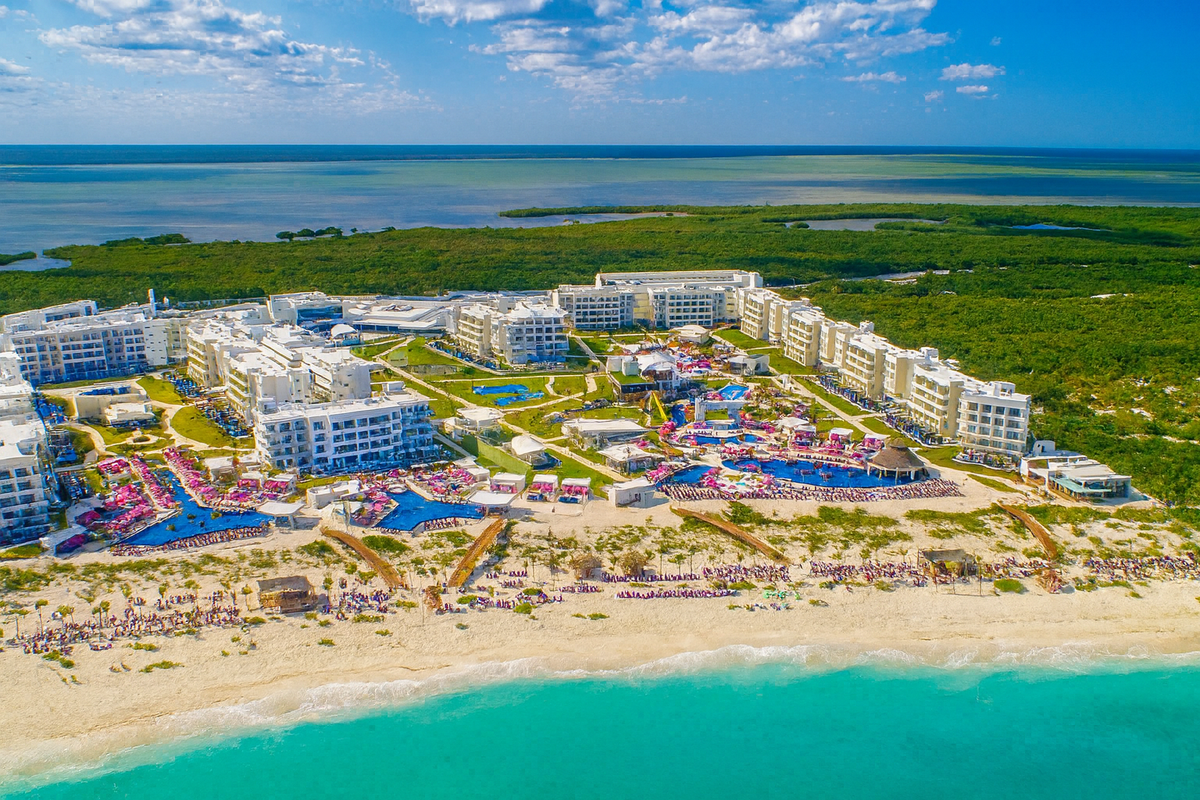
Compared with the classic Hotel Zone, Costa Mujeres has some structural advantages. The coastline orientation and protection from Isla Mujeres can soften the impact of sargassum compared with more exposed stretches of the Mexican Caribbean, though it does not eliminate the problem. The water is shallow and calm, the sand is postcard-grade, and there is still a buffer of protected vegetation behind many properties. On the other hand, you don’t have the same density of restaurants, malls and nightlife at your doorstep; most guests stay inside their resorts or shuttle to Cancún for shopping and entertainment.
From an investor’s lens, that means Costa Mujeres is a pure resort play. This is not Puerto Cancún or downtown, where you get a mix of locals, expats, schools and offices. You are betting on one thing: ongoing high-end tourism.
Supply, Brands and the Development Pipeline
The resort layer is what makes the entire thesis work. By 2025 Costa Mujeres counts close to twenty operating hotels with around nine thousand rooms, a number expected to push past ten thousand as new projects open. The corridor is dominated by familiar all-inclusive names: large-format resorts with several pools, restaurants, water parks and entertainment zones. The guest profile is mostly North American and European families and couples on packages.
The more interesting story for capital is the second wave: the arrival of ultra-luxury and wellness-focused brands backed by international hotel groups and local developers. St. Regis Costa Mujeres, JW Marriott Costa Mujeres and W Costa Mujeres are all in various stages of development, with openings projected over the next few years, each combining a five-star resort with a limited number of branded residences. SHA Wellness adds a high-ticket health and longevity angle that attracts long-stay, high-spend clientele.
State-level plans see Costa Mujeres as one of the main vectors of hotel growth in Quintana Roo, with a long-term goal of roughly twenty-five thousand rooms in this corridor alone. For an investor, this is a double-edged sword: the critical mass of rooms supports flights, marketing and infrastructure, but large capacity also caps your ability to raise prices if the macro cycle weakens.
The Residential Market and Pricing in 2025
Unlike Tulum or Playa del Carmen, Costa Mujeres is not flooded with for-sale condos. The dominant product is still hotel rooms. True residential and condo-hotel projects exist, but they are limited in number and skew to the higher end.
At the more accessible end of the scale you will find smaller, non-beachfront or second-line units in the greater Cancún / Costa Mujeres catchment that can still start in the mid-200s to 300s thousand USD. Anything with real beachfront and resort-level amenities in Costa Mujeres proper tends to start significantly higher. Recent offerings for new luxury beachfront projects in the area show two- to four-bedroom units starting around the high six hundreds in USD and moving up from there.
Branded residences for St. Regis, JW Marriott or W will price at an additional premium per square meter, trading less on yield and more on brand, service level and perceived safety of capital. Marketing emphasizes exclusivity, limited residential inventory tied to the resort, and full access to hotel services.
In terms of movement, Cancún overall has seen price appreciation in the low- to mid-single digits in recent years, with similar expectations into 2025. Costa Mujeres sits on the upper edge of this spectrum: pricing already reflects future expectations, and you should think of it as a growth-priced submarket rather than a bargain.
Demand, Occupancy and Rental Performance
Tourism to the Mexican Caribbean recovered strongly after the pandemic and continues to grow. Tourism already represents a significant share of Mexico’s GDP again, and Cancún–Riviera Maya remains one of the most visited beach destinations in the Americas. Hotel occupancies often sit in the 70–80% range during peak months, and vacation rentals in prime beach locations can achieve healthy occupancy when managed professionally.
For investors, this translates roughly as:
- Gross yields for typical apartments in Mexico often fall around 5–6% for long-term rentals, and Cancún is broadly in that band.
- Vacation rentals in strong beach markets can reach something like 6–12% annual ROI in good years if the property is well located and properly managed.
- After management fees, HOA, maintenance, insurance and taxes, realistic net yields land closer to 3–6% for most owners.
Costa Mujeres has its own particular dynamic. The area is dominated by all-inclusive resorts, which means much of the tourist flow is “locked” into packages and less likely to book independent condos. At the same time, the growing wave of branded residences will operate more like condo-hotel units with integrated rental programs, using the hotel’s marketing, distribution and operations. In that model, you are not competing with hotels; you are part of the hotel.
The trade-off is revenue versus control. Branded residence rental pools can deliver decent occupancy with minimal effort, but they take an aggressive share of revenue and impose strict usage rules. Independent condos outside that system offer more freedom and sometimes higher net yields, but depend heavily on individual marketing, reviews and management quality.
Key Strengths of Costa Mujeres as an Investment Story
From an investor’s notebook, the structural positives look like this in plain language.
You are tied to one of the most resilient tourism engines in the region. Cancún remains a top global leisure destination by arrivals, with robust air connectivity and a diversified base of airlines and tour operators. Quintana Roo as a state is still the heavyweight of Mexican tourism, and Costa Mujeres is one of its newest, most polished faces.
The corridor itself is early in its life cycle. Hotel and infrastructure investment continues, pipeline brands are high quality, and local authorities clearly want this to be the “new luxury front” of the Mexican Caribbean. Supply on the for-sale residential side remains limited compared with hotel stock. This scarcity, combined with the marketing power of top-tier hotel flags, supports the long-term appreciation argument for well-located, quality units.
Accessibility is excellent. A short drive from a major international airport with hundreds of daily flights is a non-negotiable advantage. In practice, this means short transfer times for guests and easier logistics for owners and managers.
For someone building a global portfolio of “hard” lifestyle assets, Costa Mujeres can function as a relatively conservative, income-producing Caribbean leg: dollar-linked, tourism-backed, and anchored by serious brands rather than speculative one-off projects.
Real Risks and Friction Points
An honest review has to cover the unattractive parts as well.
First, concentration risk. Costa Mujeres is almost entirely dependent on international tourism and, more specifically, on the North American and European market. Any shock to air connectivity, US demand, or Mexico’s security perception flows straight into occupancy and average daily rates.
Second, the risk of gradual overbuild. While the corridor is marketed as low-density and exclusive, the official pipeline and long-term room targets suggest a very large number of rooms in the future. If regulators relax or environmental oversight weakens, the beach could gradually resemble other dense coastal strips, and the “exclusive frontier” narrative will fade.
Third, regulatory and tax drag. Foreign buyers of coastal property still need a bank trust (fideicomiso) or corporate structure. Non-resident investors face withholding on Mexican-source rental income and local capital gains rules on exit. Professional advice is mandatory if you want to keep more of your yield.
Fourth, environmental and climate risk. The corridor sits between a fragile dune line and protected mangroves. Hurricanes remain a constant reality, and insurance for beachfront properties has become more expensive. Environmental activism and regulatory enforcement can delay or alter projects, which is good for the ecosystem, but introduces timing risk for pre-construction buyers.
Finally, lifestyle limitations. Outside the resorts and one golf course, day-to-day infrastructure is minimal. For owners wanting to spend months per year, Costa Mujeres feels like living inside a resort belt rather than a real town. For some, that is exactly the point. For others, it quickly becomes claustrophobic, and they prefer the city and neighborhood life of Cancún, Playa del Carmen or Mérida.
ROI Scenarios: How to Think About the Numbers
If you strip away marketing slides and use conservative assumptions tied to actual performance in comparable Mexican Caribbean markets, a reasonable underwriting framework for 2025 looks like this.
For a beachfront condo in the 700–900k USD range in Costa Mujeres with resort-level amenities, assume:
- Gross annual rental income in a normal year of roughly 8–12% of purchase price if run as a short-term rental in a strong program.
- Net yield after management, HOA, maintenance, insurance and basic taxes more realistically in the 3–6% band.
For a branded residence in the 1M+ bracket:
- Expect lower yield on paper due to pricing premium, but somewhat more predictable occupancy and an easier exit thanks to the hotel flag.
- Treat the investment as a hybrid: part financial asset, part lifestyle and status purchase.
On top of income, you can pencil in capital appreciation in the low- to mid-single digits per year as long as the wider Cancún market remains healthy and the luxury story holds. Costa Mujeres, being newer and more exclusive, may sit on the upper side of that band over a full cycle, but it is already pricing in a lot of future optimism. The most important discipline is not to underwrite Costa Mujeres as a magical 15–20% cash-on-cash machine. Those numbers belong to sales presentations built around perfect occupancy, ideal pricing and low costs; reality is messier.
2025–2030 Outlook: Who Should Be Buying Here
Looking out over the next five years, the story is straightforward. Quintana Roo keeps adding hotel rooms, Cancún Airport stays one of the busiest in Latin America, and Costa Mujeres matures from a “new corridor” into a fully established luxury zone. The opening of the next wave of five-star resorts and branded residences will reinforce the area’s position at the very top of Mexico’s resort hierarchy.
Costa Mujeres does make sense for investors who want exposure to Mexican Caribbean tourism with a bias toward safety, brand and capital preservation rather than maximum yield; for buyers who will personally use the property several weeks per year and treat rental income as a subsidy; and for families and high-net-worth individuals building a diversified global portfolio of lifestyle assets.
It is less suitable for highly leveraged investors who need double-digit net yields to make the math work, and for people looking for urban life, local culture on foot and a mix of uses. Those profiles will usually be happier in more “real city” markets.
Bottom Line
Costa Mujeres in 2025 is a textbook example of a top-down tourism project: the state defines a corridor, the big hotel flags arrive, the airport feeds them, and only then do residential investors get invited to the party. Entering that party today, you are not discovering a hidden gem; you are taking a seat at a well-organized, still-growing table in the luxury segment of Mexico’s strongest tourism region.
As an investment, the story works if you price risk correctly: expect solid, dollar-linked income, modest but steady appreciation, and a lot of leverage from the marketing budgets of global brands. Do not expect miracles, and factor in hurricanes, regulation, possible oversupply and the realities of running what is essentially a small hospitality business.
If you accept those parameters, Costa Mujeres can be a rational, strategically located piece of a broader portfolio—less romantic than a jungle villa in Tulum, perhaps, but more grounded in the hard numbers of planes, rooms and occupancy that ultimately pay your bills.
🏡 Top Residential Projects in Costa Mujeres
1. St. Regis Costa Mujeres Residences — Ultra-Luxury Flagship
Status: Under construction
Format: Branded residences (approx. 80 units)
Types: 1–4 bedrooms, penthouses
Price range: $1.2M – $3.5M+ USD
Description:
The most prestigious and expensive residential project on the entire Costa Mujeres coastline. Private elevators, Butler Service, beachfront access, panoramic views, and seamless integration with a 5-star St. Regis resort. A defensive, low-risk asset class for UHNW investors who want liquidity, brand value, and international recognition.
2. JW Marriott Costa Mujeres Residences — Premium Family Luxury
Status: Under development (2026–2027)
Format: Branded residences
Types: 1–3 bedrooms
Price range: $850,000 – $2,200,000 USD
Description:
A refined, family-oriented luxury residence concept with full Marriott service infrastructure. Owners gain access to resort facilities, restaurants, spas, and a fully managed rental program. Ideal for investors who want a strong brand backbone and predictable performance.
3. W Costa Mujeres Residences — Modern Lifestyle Luxury
Status: Under construction
Format: Contemporary branded residences
Types: 1–3 bedrooms
Price range: $900,000 – $2,500,000 USD
Description:
A bold, design-forward project targeting younger luxury travelers. Stylish architecture, nightlife-focused amenities, bars, beach clubs, and strong appeal to US and Canadian millennial buyers. Excellent long-term rental potential.
4. Sereia Tower Costa Mujeres — Mid-Luxury Condos (Best Entry Price)
Status: Completed / delivering
Format: Traditional condominiums
Types: 1–3 bedrooms + bungalows
Price range: $260,000 – $580,000 USD
Description:
One of the few “affordable” Costa Mujeres options. Strong value for money, modern amenities, security, pools, gym, and walking distance to the beach. Ideal for first-time investors entering Costa Mujeres without paying branded-residence premiums.
5. Isla Blanca Premium Villas — Lagoon & Nature Villas
Status: Under construction
Format: Private villas
Types: 3–5 bedrooms
Price range: $650,000 – $1,200,000 USD
Description:
Located along the pristine, low-density Isla Blanca corridor. Larger land plots, private pools, quiet surroundings, lagoon views, and direct nature access. Perfect for buyers who want a home rather than an apartment, with high long-term appreciation potential due to scarce land supply.
6. Playa Mujeres Residential Zone — Golf & Marina Community
Status: Operating residential zone
Format: Condos + villas
Types: 2–4 bedrooms
Price range: $380,000 – $1,200,000 USD
Description:
The most “residential” part of Costa Mujeres. Next to the Greg Norman golf course and the marina, this area attracts yacht owners, golfers, and long-stay expats. Quiet, well-organized, and excellent for mixed-use (personal use + rentals).
7. SHA Wellness Residences — Medical & Longevity Luxury
Status: Opening in phases
Format: Wellness residences
Types: 1–3 bedrooms
Price range: $1M – $2.8M USD
Description:
One of the most unique concepts in the Americas. A hybrid of luxury resort, health clinic, and longevity center. Attracts wealthy European and US demand looking for high-end health experiences. Strong premium positioning and low competition.
8. Ocean Homes Costa Mujeres — Beachfront Condo-Hotel
Status: Completed / operational
Format: Condo-hotel
Types: 1–3 bedrooms
Price range: $320,000 – $900,000 USD
Description:
Classic beachfront investment formula: access to hotel amenities, pools, restaurants, kids’ areas, concierge, and consistent short-term rental demand. One of the safest ROI plays for mid-range investors.
9. AB Living Residences — Developer Portfolio Projects
Status: Multiple phases
Format: Luxury & branded condos
Types: 1–3 bedrooms
Price range: $350,000 – $1,500,000+ USD
Description:
AB Living is the primary developer behind the entire Costa Mujeres transformation. Their projects are stable, well-managed, and often tied to global hotel brands. Great for investors seeking predictable execution and long-term capital appreciation.
10. Boutique Beachfront Residences (20–40 units)
Status: Various small-scale projects
Types: 2–4 bedrooms
Price range: $450,000 – $1,000,000+ USD
Description:
Small, low-density beachfront complexes with 20–40 residences. Private pools, spa, restaurant, gym, and direct beach access. Perfect for clients who prefer quiet, exclusivity, and a more personal atmosphere than giant resorts.